


The Future of Edible Oils
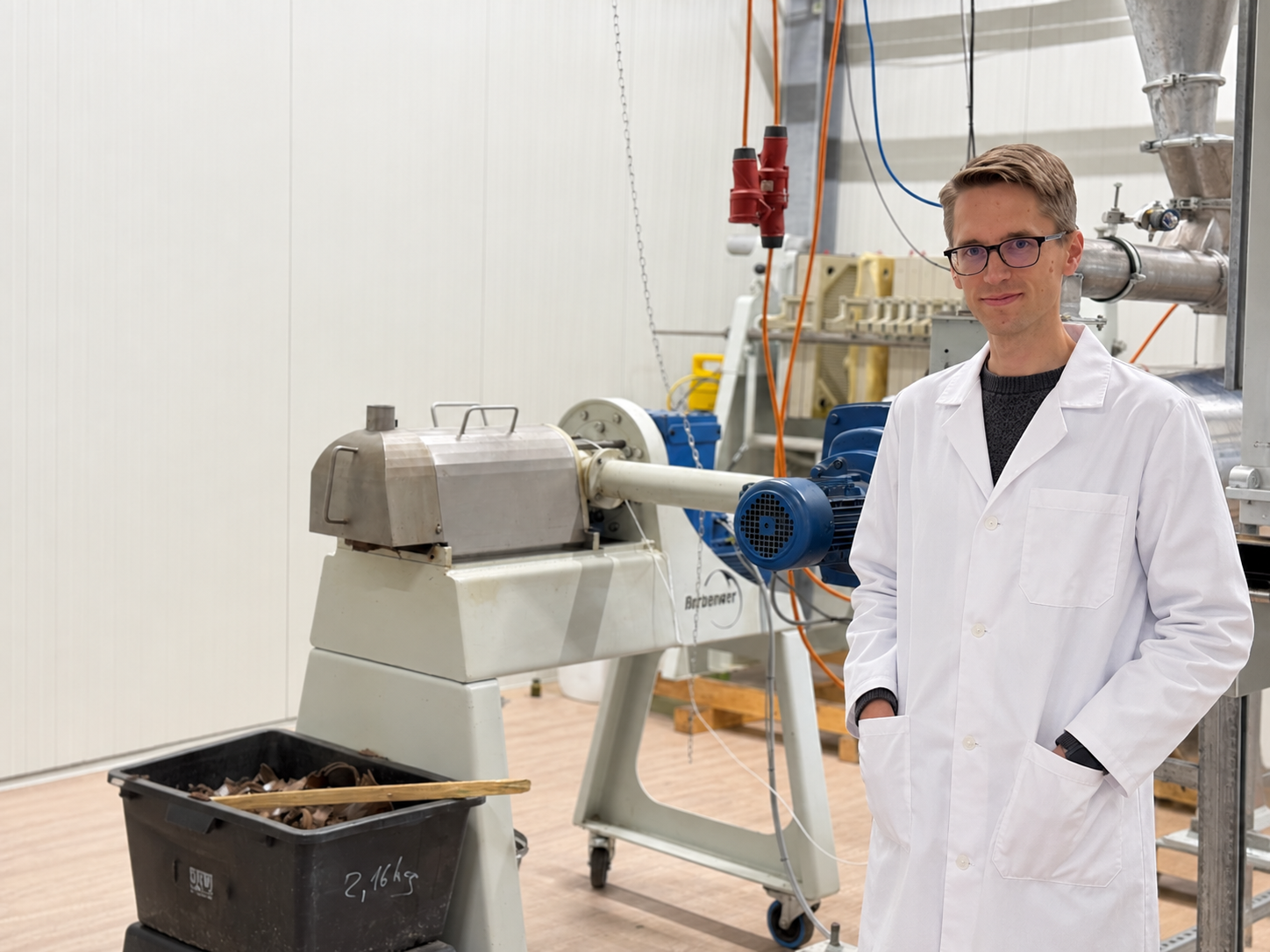
For decades, the edible oil industry has operated under a relatively simple economic principle: produce a safe, stable oil at the lowest possible cost.
Price, yield, availability and processing efficiency have therefore been dominant drivers across the value chain.Refining technologies have evolved to remove unwanted components, improve stability and extend shelf life, while breeding and processing have increasingly focused on delivering oils with predictable composition and technological performance. [1] [2]
But the world in which edible oils compete is changing.
Consumers are increasingly interested not only in the price of an oil, but in its nutritional value, origin, sustainability and health implications. Food manufacturers require oils that perform reliably under increasingly demanding processing conditions. Regulators and society are placing greater pressure on the food industry to reduce environmental impacts. At the same time, advances in lipidomics, analytical chemistry and nutritional science are revealing that an oil is far more than its fatty acid profile and triglyceride composition. [5]
What if the future of edible oils is not about producing oils more cheaply, but about producing oils with greater functionality?
From Price to Value
The price per kilogram will remain important. But it may no longer be sufficient to define the economic value of an edible oil.
An oil with higher oxidative stability may reduce food waste and extend product shelf life. An oil with superior frying performance may require fewer oil changes and generate fewer degradation products. An oil retaining valuable minor compounds may provide nutritional functionality beyond its basic energy contribution. [1] [3] [4] An oil produced with lower environmental impact may become more attractive as carbon accounting becomes increasingly integrated into food production.
The relevant metric could therefore gradually shift from cost per kilogram toward cost per unit of functionality.
This is not simply a question for marketing. It is a scientific challenge.
Can we quantitatively define oil functionality? Can technological stability, nutritional quality, sustainability and economic value be integrated into meaningful performance metrics? And can these properties be predicted from the molecular composition of an oil?
Beyond “Healthy” and “Unhealthy”
The same shift is occurring in the discussion of health.
For a long time, oils have been classified primarily according to their fatty acid composition. Saturated, monounsaturated and polyunsaturated fatty acids remain fundamental characteristics, but they represent only one layer of oil functionality.
Minor compounds, oxidation products, lipid mediators and digestion products can profoundly influence the biological behaviour of dietary lipids. Modern analytical approaches are increasingly allowing us to move from broad compositional measurements toward molecularly resolved lipid profiles. [5]
This creates an opportunity to redefine what we mean by a “healthy oil”.
Rather than asking simply whether an oil contains more or less of a particular fatty acid, we should increasingly ask:
What happens to this oil during storage, processing and digestion. And which molecules ultimately reach the biological system?
The future of nutritional lipid science will therefore require much closer integration of lipid chemistry, food processing, analytical science and biology.

Natural versus Processed Is the Wrong Question
The discussion around edible oils is oftenframed as a choice between “natural” and “processed”.
This is too simplistic.
Processing can remove contaminants and undesirable compounds, but it can also remove potentially valuable minor components or alter the chemical composition of an oil. [1] [2] [3] Conversely, minimally processed oils can retain bioactive compounds but may have limitations in stability, contaminants or technological performance. [9] [10]
The more meaningful question is therefore not:
Is the oil natural or processed?
but:
Does processing preserve, remove or create functionality?
This could fundamentally change how we think about refining.
In current practice almost every departure from a pale, odourless oil is treated as a problem: colour, smell, phospholipids, cloudiness. The more useful principle could be the opposite.Natural qualities should be retained, and the oil modified only when this is strictly necessary — above all when toxin, pesticide, mycotoxin or process-contaminant levels require refining. [2] [6] [7]
An unrefined oil is not an unfinished one. Colour, aroma, phospholipids, antioxidants, pigments and flavour are part of its functionality. [1] [6] Cold pressing may therefore need to be rediscovered as a serious processing option. [9] Fast cooking at home does not necessarily need a refined oil with stabilizing additives. A kitchen that fries intensively for twelve hours a day does.
The same could apply to press-cakeresidues. They can support functionality in one oil, as they often do inflaxseed oil, and work against it in another, as they can in black seed oil.[11] [12]
.jpg)
The Refinery of the Future
Today's refining processes are largely designed around a clear objective: produce a stable, safe and specification-compliant oil by removing undesirable components. [2]
But imagine a refinery designed around a different principle:
Preserve desirable functionality while selectively removing undesirable chemistry.
Such a refinery would not simply seek to produce the purest possible triglyceride fraction. It could be designed to preserve and optimize the molecular characteristics that determine the functionality of the final oil.
This might include selective removal of contaminants while preserving valuable minor compounds, optimization of antioxidant systems, control of oxidation pathways, reduction of process-induced degradation products, or optimization of oils for improved technological performance. [7] [8] [13]
The refinery could therefore evolve from a purification plant into a functionality-design platform.
This does not mean abandoning refining. Onthe contrary, it means making refining more sophisticated.
The key question for the industry maybecome:
Which components should be removed and which should deliberately be retained?
Answering this question will require much better molecular understanding of how individual lipid species and minor compounds contribute to stability, flavour, processing performance, digestion and biological activity. [5] [13]
A New Research Agenda for Lipid Science
This approach creates exciting opportunities for the lipid community.
We need to understand how seed composition determines technological and nutritional functionality. We need analytical methods capable of detecting molecular changes that remain invisible to conventional bulk measurements. We need to understand how processing changes the molecular identity of oils and how those changes influence stability and biological activity.
We also need predictive approaches.
Can we predict the shelf life of an oil from its molecular fingerprint? Can we predict frying performance from its composition and minor compounds? Can we predict the biological consequences of oxidation products formed during storage and processing? Can we optimize nutritional value, stability, sustainability and cost simultaneously?
And perhaps most importantly:
Can we design oils with enhanced nutritional and technological functionality rather than simply accept the properties that come with a particular commodity?
These questions cannot be answered by one discipline alone. They require a new integration of lipid chemistry, analytical science, food technology, nutrition, biology, crop science and process engineering.
The Opportunity for Our Community
Lipid science is uniquely positioned to drive this transition. The field already spans the complete continuum from molecular structure and analytical chemistry to food processing, nutrition, health and industrial applications. The challenge is to connect these areas more effectively.
The next generation of lipid research should therefore move beyond describing composition and toward understanding, predicting and designing functionality.
This could also change the relationship between academia and industry. Rather than asking industry to translate fundamental discoveries into applications after the fact, scientists and industrial researchers can jointly define the functionality that future oils should deliver and work backwards toward the molecular and technological solutions required.
The winners in the future edible-oil landscape may therefore not simply be those who produce oils at the lowest cost.
They may be those who can produce oils with the right balance of health, stability, sustainability and economic value.
The future of edible oils may ultimately be less about commodities and more about designed functionality.
And that is a challenge for the entire lipid community.
References
[1] Fine, F., Brochet, C., Gaud, M., Carre, P., Simon, N.,Rambeau, M., Joffre, F., Raffier, C., Menard, O., Villeneuve, J., et al.,Micronutrients in vegetable oils: The impact of crushing and refining processeson vitamins and antioxidants in sunflower, rapeseed, and soybean oils. Eur. J.Lipid Sci. Technol. 2016, 118, 680–697. DOI: 10.1002/ejlt.201400400
[2] Gharby, S., Refining vegetable oils: Chemical and physicalrefining. Sci. World J. 2022, 2022, 6627013. DOI: 10.1155/2022/6627013
[3] Gotor, A. A., Rhazi, L., Effects of refining process onsunflower oil minor components: a review. OCL 2016, 23, D207. DOI:10.1051/ocl/2016007
[4] Li, Y., et al., Effects of origin, processing, andrefining technologies on antioxidant phytochemicals in vegetable oils. J. FoodSci. 2025, 90, e70529. DOI: 10.1111/1750-3841.70529
[5] Sun, T., Wang, X., Cong, P., Xu, J., Xue, C., Massspectrometry-based lipidomics in food science and nutritional health: Acomprehensive review. Compr. Rev. Food Sci. Food Saf. 2020, 19, 2539–2564. DOI:10.1111/1541-4337.12603
[6] Cui, L., Decker, E. A., Phospholipids in foods:prooxidants or antioxidants? J. Sci. Food Agric. 2016, 96, 18–31. DOI:10.1002/jsfa.7320
[7] EFSA Panel on Contaminants in the Food Chain (CONTAM),Risks for human health related to the presence of 3- and2-monochloropropanediol (MCPD), and their fatty acid esters, and glycidyl fattyacid esters in food. EFSA J. 2016, 14, 4426. DOI: 10.2903/j.efsa.2016.4426
[8] Yung, Y. L., Lakshmanan, S., Kumaresan, S., Chu, C. M.,Tham, H. J., Mitigation of 3-monochloropropane 1,2 diol ester and glycidylester in refined oil – A review. Food Chem. 2023, 429, 136913. DOI:10.1016/j.foodchem.2023.136913
[9] Wroniak, M., Krygier, K., Kaczmarczyk, M., Comparison ofthe quality of cold pressed and virgin rapeseed oils with industrially obtainedoils. Pol. J. Food Nutr. Sci. 2008, 58, 85–89.
[10] Chew, S. C., Cold-pressed rapeseed (Brassica napus) oil:Chemistry and functionality. Food Res. Int. 2020, 131, 108997. DOI:10.1016/j.foodres.2020.108997
[11] Fruehwirth, S., Steinschaden, R., Woschitz, L., Richter,P., Schreiner, M., Hoffmann, B., Hoffmann, W., Pignitter, M., Oil-assistedextraction of polyphenols from press cake to enhance oxidative stability offlaxseed oil. LWT 2020, 133, 110006. DOI: 10.1016/j.lwt.2020.110006
[12] Ramadan, M. F., Nutritional value, functional propertiesand nutraceutical applications of black cumin (Nigella sativa L.): an overview.Int. J. Food Sci. Technol. 2007, 42, 1208–1218. DOI:10.1111/j.1365-2621.2006.01417.x
[13] Chen, B., McClements, D. J., Decker, E. A., Minorcomponents in food oils: a critical review of their roles on lipid oxidationchemistry in bulk oils and emulsions. Crit. Rev. Food Sci. Nutr. 2011, 51,901–916. DOI: 10.1080/10408398.2011.606379
Share it with your friends!


Lipid Magazine
Go to Magazine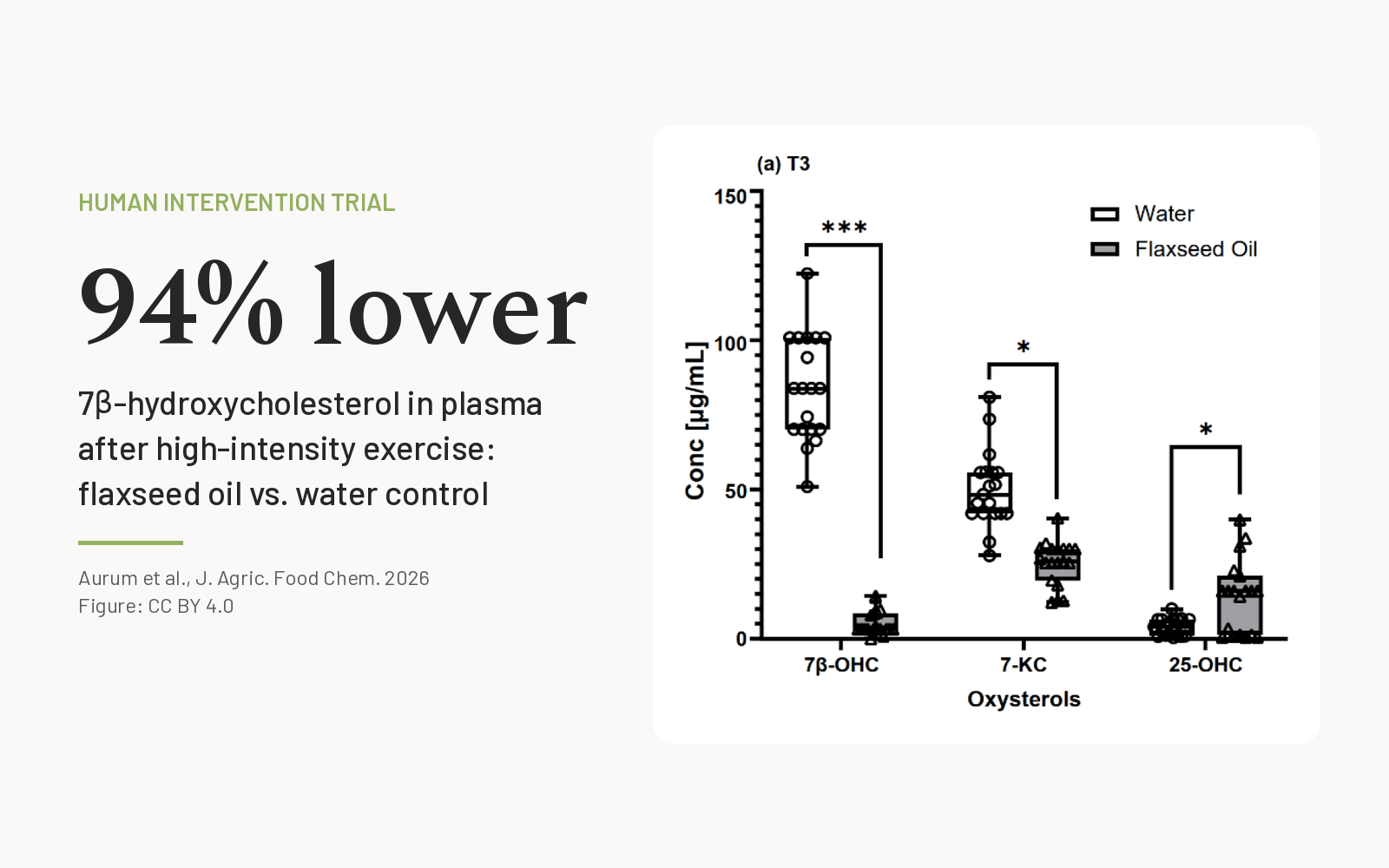
Optimized Flaxseed Oil Trial
Stable vegetable oils
Our commitment to the highest quality and safety is reflected in each of our products.
Safety
We offer healthier alternatives to conventional cold-pressed vegetable oils.
Learn More
Discover insider secrets, valuable knowledge, impressive stories and much more in our magazine.
to magazine
